Deep Sleep Sounds: What to Play for More Restorative Sleep
Deep sleep is when your body repairs tissue and your brain consolidates memory — and it is the stage most easily shredded by noise. Sound can defend it.
Last updated: July 11, 2026
Short answer: play low-frequency steady sound — brown noise, pink noise, or ocean waves — at conversation volume or below, through at least the first 3–4 hours of the night. That window is where most deep sleep happens, and masking micro-awakenings during it is the highest-leverage thing audio can do for sleep quality.
What deep sleep is, in one paragraph
Sleep runs in roughly 90-minute cycles, and each cycle dips through light sleep into slow-wave sleep — the deep stage where growth hormone releases, tissue repairs, and the day's memories get filed. Most of it happens in the first two or three cycles of the night. Miss it early and you cannot make it up at dawn, which is why a noisy first half of the night leaves you wrecked even after eight hours in bed.
How noise steals deep sleep without waking you
The cruelest part: noise fragments deep sleep through micro-awakenings you never remember. A car door at midnight can bounce you from slow-wave sleep up to light sleep for thirty seconds, and your brain has to work its way back down. String a dozen of those together and you wake up tired with no idea why. Masking exists to stop exactly this.
The deep sleep sound shortlist
- Brown noise — deep, rumbling, and concentrated in the low frequencies where doors, footsteps, and traffic live. The workhorse.
- Pink noise — the researched one: studies have linked pink noise during sleep to enhanced slow-wave activity. Sounds like steady rain.
- Ocean waves — adds a slow rhythm some sleepers find easier to stay under with; pick a recording without crashing peaks.
- Avoid: anything with melody, speech, or variation. Interest is the enemy of slow-wave sleep.
Unsure between them? The best sounds for sleep guide matches each to what wakes you.
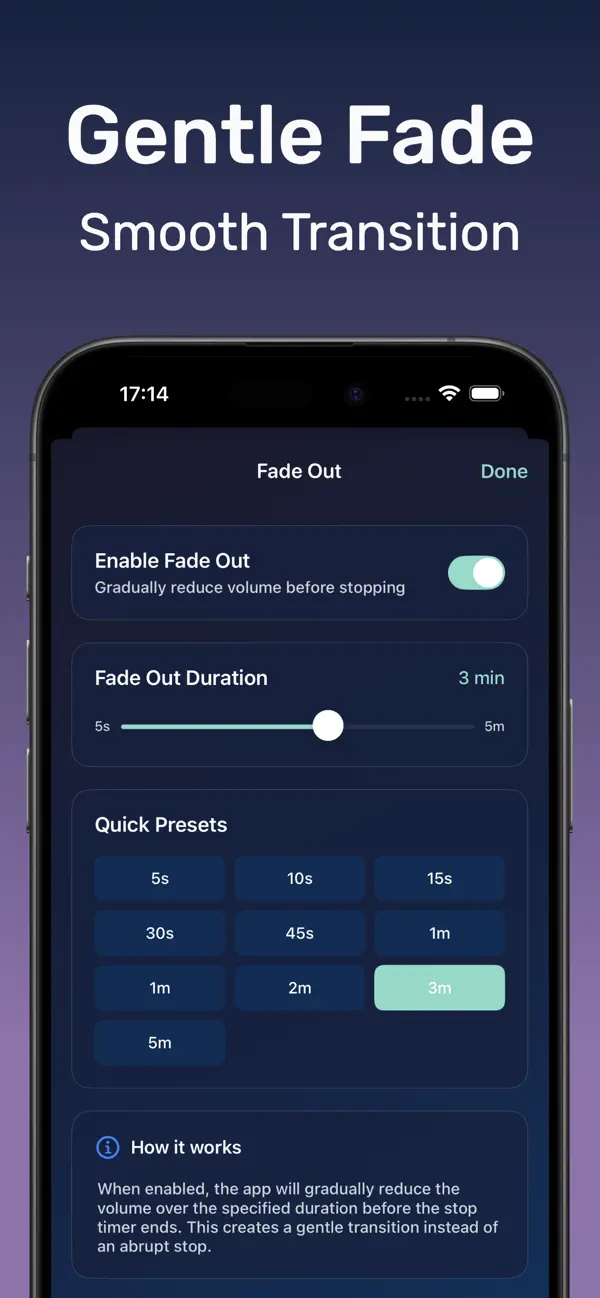
The deep sleep protocol in DRMN
- Download Sound Machine Deep Sleep DRMN free from the App Store.
- Pick Brown Noise or Pink Noise. For a natural texture, mix ocean waves over either at low volume.
- Set volume at or below conversation level — masking, not stimulation.
- Set the sleep timer to at least 4 hours to cover your deep sleep window, or 8–10 hours if noise runs all night. The gradual fade-out means the ending itself never disturbs a cycle.
- Keep the same setup every night. Consistent cues shorten the time it takes to reach deep sleep in the first place.


Frequently asked questions
What sounds are best for deep sleep?
Brown noise, pink noise, and ocean waves — steady, low-frequency, no melody. Pink noise carries the most research interest for slow-wave activity.
When does deep sleep happen?
Mostly in the first 3–4 hours of the night. Protect that window from noise and you protect most of your deep sleep.
How loud should the sound be?
Conversation level or below. If you can talk comfortably over it, you're in range.