
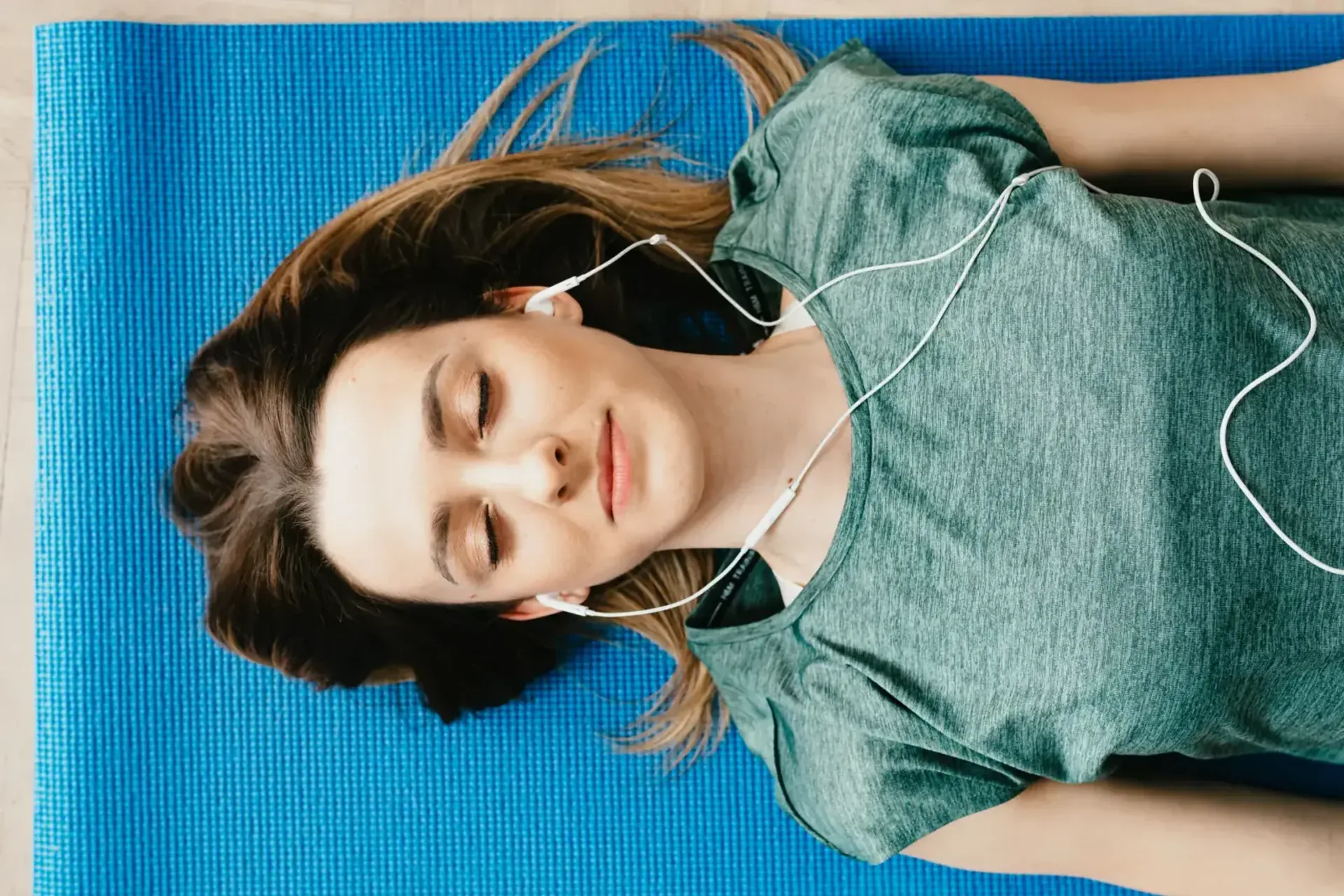
Rain sounds for sleep are steady nature audio loops that mimic rainfall: soft patter, gentle hiss, and low-frequency rumble without dramatic thunder or lyrics. They fill the bedroom with predictable sound so brief noises (traffic, neighbors, a creaking floor) stand out less against a calm baseline.
Rain is one of the most streamed sleep sounds because it feels familiar and non-threatening. Yet not every rain recording works equally well. Some loops have audible seams, sudden thunder, or a hiss that sounds more like static than a window in a storm. Track type, volume, and timing decide whether rain becomes background calm or another distraction.
Why rain helps the brain settle
Steady rainfall sits closer to pink noise than to pure white noise. Energy is weighted toward lower frequencies, which many people describe as softer and less fatiguing than bright static. For how pink noise relates to deep sleep, see our guide to pink noise for deep sleep.
Rain also carries strong safety cues for a lot of listeners. You are indoors, sheltered, and not required to act. That can nudge the nervous system toward rest, especially when you pair the sound with dim light and a fixed bedtime.
During lighter sleep stages, your brain still scans the room. Predictable rain lowers the contrast when a random sound appears. Instead of silence broken by a shock, you get a continuous bed that makes spikes less noticeable. That is the same masking principle described in our white noise guide.
Rain vs white noise: which should you choose?
Your bedroom noise profile and what your ears tolerate matter more than any universal winner.
| Sound type | What it sounds like | Good fit when |
|---|---|---|
| Light rain | Soft patter, steady hiss | You want constant texture with no dramatic peaks |
| Window rain | Close droplets on glass | You like a cozy, indoor feel at bedtime |
| White noise | Bright, even static | High-pitched street noise is the main problem |
| Brown noise | Deep rumble | Rain still sounds too bright; you want low-frequency masking |
- Choose rain if high-pitched hiss feels irritating or if you want a natural texture that fades into the background.
- Choose white or brown noise if you need stronger masking of sharp urban sounds (sirens, keys, slamming doors) or if rain tracks you have tried feel too variable.
- Try brown noise if rain still sounds too bright; it emphasizes low rumble similar to distant thunder without the drama.
Many people switch by season or mood. Test one sound for a full week before you judge it, not an hour with ten different tracks.
Types of rain recordings worth trying
Not all rain is the same texture. Three common styles work well at bedtime:
- Light drizzle: steady, low-drama patter with minimal bass. Good if you wake easily to rumble or thunder.
- Window rain: close droplets on glass with a soft indoor feel. Many listeners find this the most "cozy" option.
- Distant storm bed: low-frequency roll without sharp thunderclaps. Useful when traffic rumble is the main annoyance.
Forest rain and urban rain on metal roofs sit at opposite ends of brightness. Forest mixes tend to be warmer and less hiss-heavy. Urban recordings can mask sharp city sounds but may carry more high-frequency edge. If a track feels bright after ten minutes, switch texture before you raise volume.
For a rhythmic alternative with more rise-and-fall, see how ocean wave sounds for sleep compare. Waves offer stronger cadence; rain stays more constant with fewer pauses.
What to avoid in rain recordings
Not all "rain for sleep" audio is equal. Watch for:
- Obvious loops where the pattern repeats every few seconds. Your brain detects repetition over time.
- Thunderclaps or gusts that startle, especially in "storm" mixes marketed as relaxing.
- Heavy high-frequency hiss that mimics cheap white noise with a rain label.
- Lyrics or spoken intros at the start of playlists. They re-engage language centers right when you want the opposite.
Look for long, seamless beds or gentle variations without narrative arcs. If you notice yourself listening to the track instead of through it, switch.
Volume, placement, and timing
The same rules that apply to white noise apply here:
- Keep level around 40 to 50 decibels, soft enough that conversation would still be easy if someone spoke beside you.
- Place the speaker away from your pillow, not on the nightstand next to your ear.
- Start rain during your wind-down, 30 to 60 minutes before you intend to sleep, so the sound becomes part of the routine.
- Use a timer if you only want help at sleep onset; keep it all night only if you wake easily to silence.
For infants, follow pediatric guidance: low volume, several feet from the crib, and avoid maximum settings overnight. When unsure, ask your pediatrician. Our article on sound volume and sleep quality walks through decibel targets for different sleep stages.
Medical disclaimer: Rain sounds support relaxation; they are not a substitute for clinical care. Persistent sleep problems, loud snoring, or weeks of poor rest deserve medical evaluation, not louder audio.
Pair rain with a simple bedtime stack
Sound works best as one layer among a few stable habits:
- Fixed wake time, even on weekends.
- No bright screens in the last hour; use amber night lighting if needed.
- Same rain track nightly for at least a week to build a conditioned cue.
- Cool, dark room. Audio cannot fix heat or light leaking through curtains.
- If mind racing persists, brief journaling or a to-do list before audio starts.
For a broader look at music and playlists at bedtime, see sleep music that actually works. For research on noise and sleep quality, read what research says about white noise.
Key takeaways
- Rain sounds for sleep combine gentle masking with familiar safety cues for many listeners.
- Prefer seamless, low-drama loops without thunder, lyrics, or obvious repeats.
- Match the sound to your environment: light drizzle for softness, brown or white noise for sharper urban noise.
- Keep volume around 40 to 50 dB, start early, and combine sound with basic sleep hygiene.
- Test one track for a full week before switching to judge whether it actually helps.
A phone app, a smart speaker, or a bedside machine can all deliver steady rain. Pick the setup you forget is playing.