
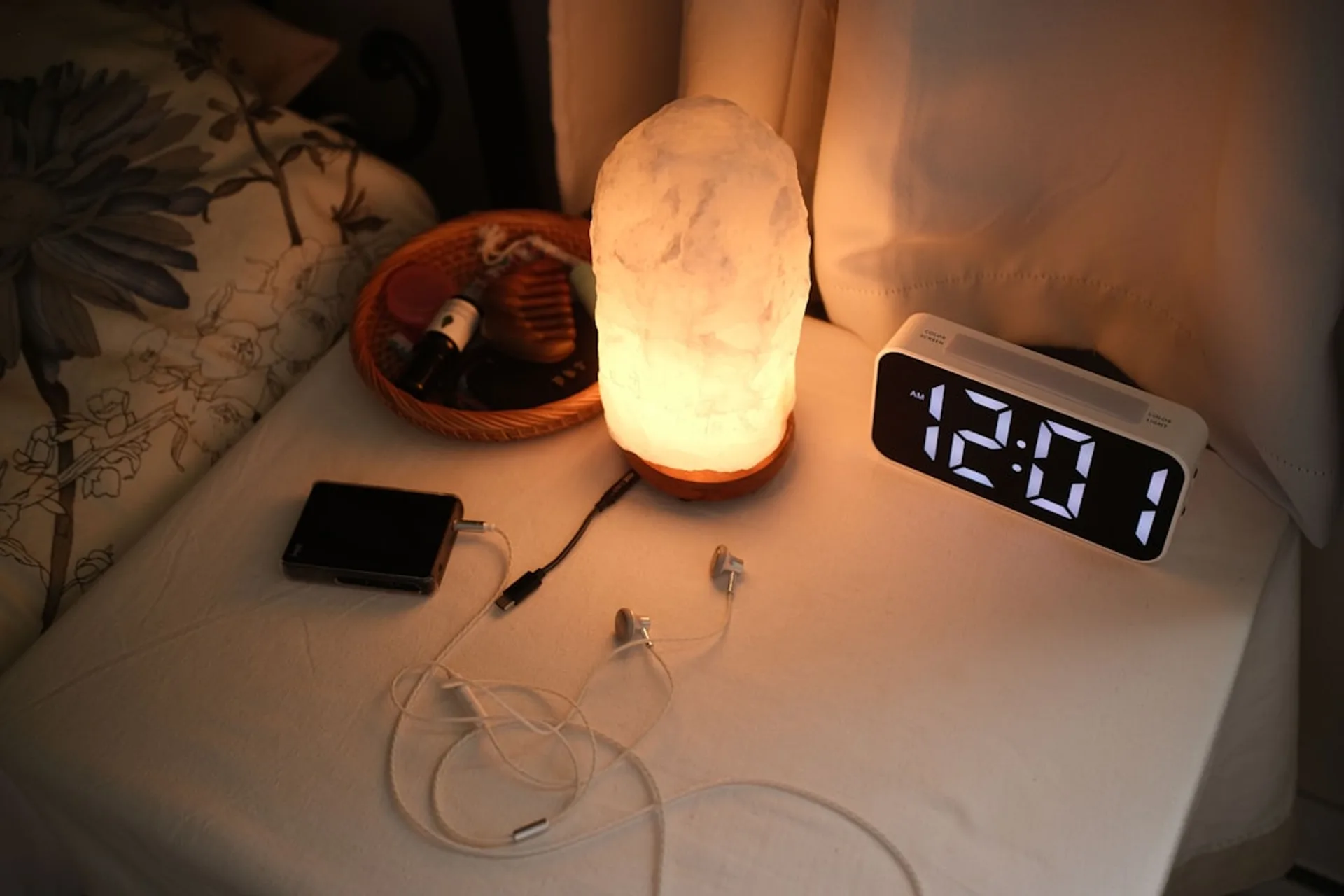
A white noise machine is a bedside device, phone app, or speaker that plays steady broadband sound to mask sudden bedroom noises and create a predictable acoustic background for sleep. Unlike music or podcasts, the sound stays flat and unchanging so your brain can file it as background rather than something to follow.
This guide covers the white noise machine product category: how it compares to a fan or phone app, safe volume levels, and a nightstand setup checklist. For broader sleep sound machines that play rain, ocean, and other loops, see our sleep sound machine guide. For white noise habits and sound types, read white noise for sleep. For decibel calibration, see sound volume and sleep quality.
Key takeaways
- A white noise machine raises the room's background noise floor to mask unpredictable sounds; it does not block noise entirely.
- Keep bedside volume around 40 to 50 dB at your pillow, measured with a decibel meter app.
- Dedicated hardware offers reliable speakers and simple controls; phone apps win on portability and sound variety.
- Position the device at least three feet from your head and angle the speaker toward the ceiling.
- Give any new setup seven nights at a fixed volume before deciding whether it helps.
What counts as a white noise machine?
Most shoppers mean one of three setups:
- Dedicated hardware: A bedside unit with a speaker, volume knob or buttons, preset sounds, and often a sleep timer.
- Phone or tablet app: Software that generates or streams loops through your device speaker or a Bluetooth speaker.
- Smart speaker: A voice-controlled speaker playing ambient audio from a built-in sound engine or streaming service.
The sound is a blend of frequencies played at roughly equal intensity across the audible range. Related options include pink noise (more bass, less hiss) and brown noise (deeper rumble). Many hardware units and apps let you switch between these colors without buying separate gear.
Hardware vs fan vs phone app
A bedside fan creates masking through air turbulence, which produces a natural broadband spectrum. Fans also circulate air, which helps in warm rooms but adds noise and draft variables you cannot tune. A purpose-built machine separates sound from airflow and offers more presets and precise volume steps.
Phone apps add flexibility: dozens of loops, fade timers, and mixing options at low cost. The trade-off is battery use, the temptation to check notifications, and speaker quality that varies by device. For a focused comparison of iPhone options, see best white noise apps for iPhone compared.
| Option | Best for | Main advantage | Main drawback |
|---|---|---|---|
| Dedicated hardware | Permanent bedside setup | Reliable speaker, simple nightly controls | Smaller sound library than most apps |
| Bedside fan | Warm rooms, familiar hum | No extra device to buy | Airflow, uneven spectrum, no timer presets |
| Phone app | Travel, trying sounds cheaply | Variety, mixing, low entry cost | Battery, notifications, variable speaker |
Safe bedroom volume levels
Louder masking does not help you sleep better. Occupational health guidelines treat sustained exposure above roughly 55 dBA in occupied spaces as worth limiting. For sleep, most specialists recommend keeping background sound near 40 to 50 dB at your pillow: audible enough to cover hallway clicks, quiet enough that you do not feel ear pressure.
Measure with a decibel meter app. Place your phone where your head rests, play your sound, and read the steady level after 10 to 15 seconds. Adjust in 2 dB steps and log how you feel each morning. Some studies suggest levels above roughly 60 dB during REM sleep may increase brief arousals, even when you do not remember waking. Hold one level for a week before you raise it.
Choosing hardware for your room
Room size and outside noise should drive your choice. A small, quiet bedroom may need only a subtle layer at the low end of the dB range. Apartments near traffic or airports benefit from a unit with a clear speaker and stable output through the night.
Sound color preference matters too. White noise can feel bright; pink or brown noise often sounds softer at the same measured level. If you share a bedroom, pick a sound both people tolerate or use a machine with a headphone jack for one partner.
When you shop for hardware, look for a volume control with fine steps, a sleep timer, and at least two sound colors. Plug-in units suit permanent bedrooms; rechargeable models pack better for hotels. Budget spans roughly $30 for basic units to $150 or more for premium models with displays, remote controls, and larger libraries. If you are unsure whether masking helps you, start with a phone app for a week before buying hardware.
Travelers often prefer apps or compact rechargeable units because they pack easily and work in unfamiliar hotel rooms. For a permanent bedroom, a plug-in machine with a simple interface reduces nightly friction: one button, one sound, no unlock screen in the dark.
Bedside setup checklist
- Distance: Place the device at least three feet from your head so intensity stays even.
- Angle: Point the speaker toward the ceiling; reflected sound spreads more evenly than a direct beam.
- Volume: Target 40 to 50 dB at the pillow; lower if the sound feels present at bedtime.
- Timer: Use a sleep timer if you only need masking at sleep onset; keep flat volume if outside noise runs all night.
- Phone hygiene: Enable Do Not Disturb, charge overnight, and turn off notification sounds.
- Power and safety: Use a stable outlet or charged battery; keep vents uncovered and cables tucked away.
- Test week: Hold the same level for seven nights before changing sounds or volume.
Common mistakes
- Volume creep: Raising level each night until morning ear fatigue appears.
- Wrong placement: Speaker inches from the pillow, which makes measured dB spike.
- Alerting content: Podcasts, music with lyrics, or loops with obvious repeats.
- Expecting instant results: Your brain may need several nights to treat the sound as background.
Medical disclaimer: Sleep and focus audio supports healthy habits; it is not a substitute for clinical care. If you regularly need hours to fall asleep, snore loudly, or feel exhausted despite long time in bed, talk to a healthcare provider.
For matching sound types to sleep stages, read choosing sleep sounds by sleep stage. Whether you choose a bedside unit, a fan, or your phone, you want a steady soundscape that gives your brain fewer reasons to startle awake.