
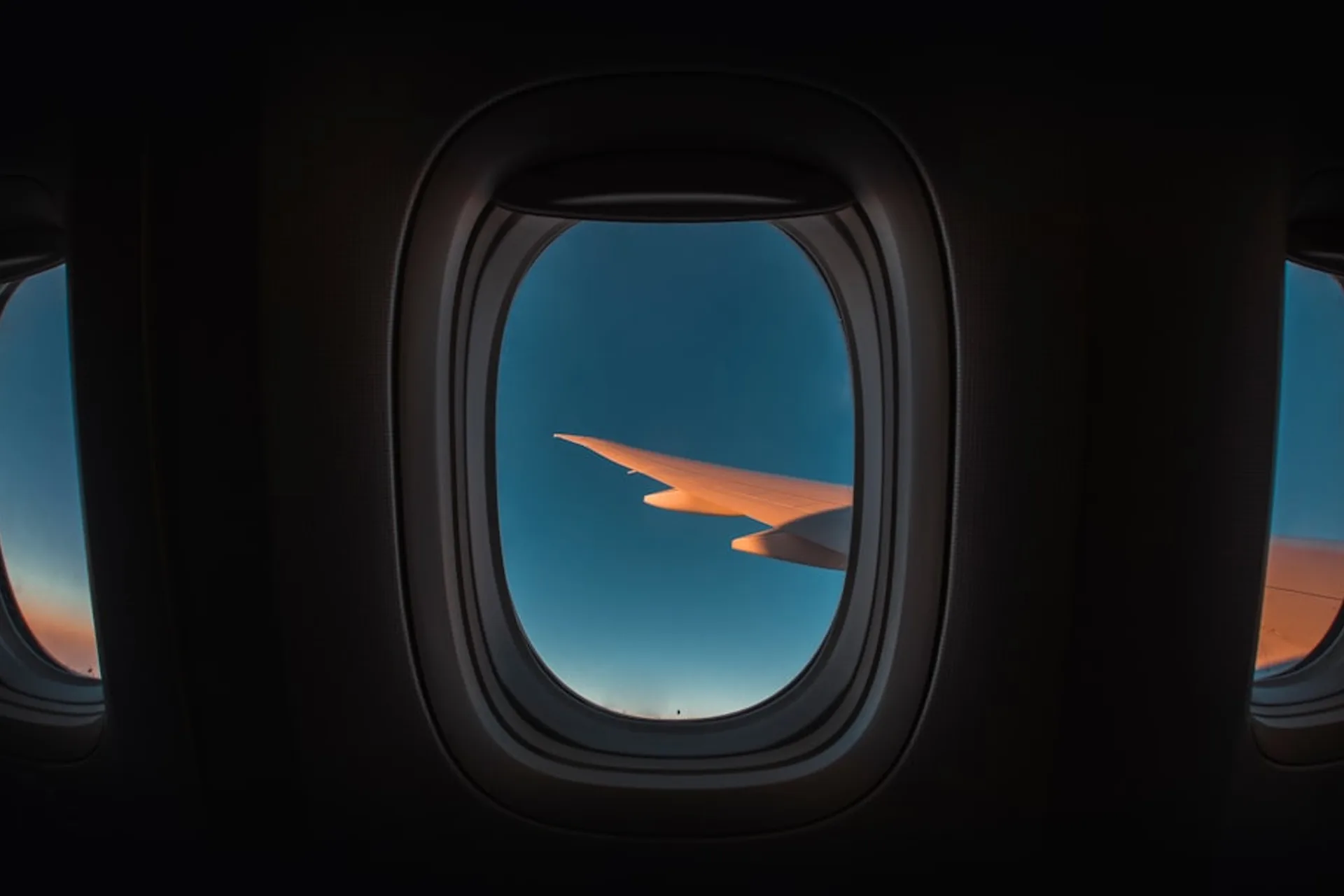
Sleep sounds travel hacks are practical ways to use steady background audio on planes, trains, and in hotels when unfamiliar noise blocks rest. The goal is masking: raise the noise floor so engine hum, announcements, and hallway chatter trigger fewer micro-arousals while you sleep or nap in transit.
This guide covers what to download before you leave, which sounds fit each setting, safe volume on headphones, and how audio pairs with jet-lag routines. For headphone fit and ANC, see noise-canceling headphones for sleep. For decibel targets, read sound volume and sleep quality.
Key takeaways
- Download one or two tested loops offline before boarding; do not rely on cabin Wi-Fi.
- Pink or brown noise at 40–50 dB masks rumble on planes and HVAC in hotels.
- Headphones help in shared cabins; a bedside speaker works when you have a solo room.
- Pair audio with dim light and a fixed local bedtime to support jet-lag adjustment.
- Travel audio supports rest habits but does not treat sleep disorders or replace medical care.
Why travel breaks sleep
Moving vehicles add low-frequency rumble, pressure changes, and unpredictable announcements. Hotels introduce thin walls, elevator dings, and ice machines. Time-zone shifts move your desired bedtime away from local light cues. None of these disappear because you feel tired.
Steady audio will not fix jet lag on its own. It does cut how often sudden sounds yank you out of light sleep, and the same bedtime track you use at home tells your brain rest still counts on the road. Some studies suggest broadband noise may shorten sleep onset in noisy settings, but evidence is mixed and effects stay modest.
Match sound to the setting
| Setting | Main noise | Starting pick | Playback tip |
|---|---|---|---|
| Economy flight | Engine rumble, carts, chatter | Pink or brown noise | Headphones; offline file; eye mask |
| Train or bus | Track clicks, stops, PA system | White or pink noise | Moderate volume; timer for naps |
| Hotel room | Hallway voices, HVAC | Brown noise or rain loop | Phone on nightstand at 42 dB |
| Airport lounge nap | Gate announcements | Pink noise + timer | 20–30 minutes max; alarm with ramp |
Test tracks at home for one week before a trip. What masks your bedroom often translates well to a cabin. If white noise feels harsh, switch to pink. If you need more bass to cover rumble, try brown. For sound-color basics, see sleep sounds basics.
Pre-trip checklist
- Save two loops offline (primary + backup).
- Charge phone and pack a small cable or battery pack.
- Enable Do Not Disturb except your alarm.
- Pack an eye mask; light and sound cues work better together.
- Note your target local bedtime for the first three nights abroad.
Airplane mode during flight saves battery and blocks notification chimes that can spike arousal even when you do not fully wake.
Volume and headphones in transit
On planes, many people use 40–50 dB at the ear with headphones. You should hear the loop without straining. Active noise cancellation can lower the playback level needed to cover engine drone; pairing ANC with a quiet pink-noise track often works better than max volume alone.
On long flights, remove in-ear headphones every few hours to reduce pressure. Over-ear models can get warm; light headband styles exist for side sleepers. If headphones bother you, skip them in a hotel and use the phone speaker at arm's length from the pillow.
Layering for cabin noise
A single steady loop is enough for most trips. If cabin chatter still cuts through, a low brown-noise base with a soft rain overlay can add masking without sharp peaks. Keep combined volume under roughly 50 dB. For layering rules, read combining sounds for sleep and focus.
Jet lag: audio as one cue, not the fix
When you land in a new time zone, lock in three habits: local wake time, morning light, and the same wind-down sound 30–45 minutes before you plan to sleep. Pink noise or rain at moderate volume marks bedtime even when your body still runs on home time.
Avoid lyrical music or news podcasts in the final hour before sleep on the road. Speech engages language processing and can delay sleep onset. For circadian timing detail, see sound frequency and circadian rhythms.
Breathing and posture add-ons
Two to three minutes of slow breathing before you start audio can lower heart rate after security lines and gate changes. Inhale for four counts, exhale for six, repeat six times. On planes, a neck pillow and seat recline reduce muscle tension that fights sleep as much as noise does.
Common travel mistakes
- Streaming without offline backup. Cabin Wi-Fi often fails when you need it most.
- Max volume to "block everything." Loud audio can increase arousal and ear fatigue.
- Switching tracks mid-flight. Stick to one loop per leg so your brain learns the cue.
- Skipping the eye mask. Screen glow and reading lights fight the wind-down you built with audio.
- Expecting audio to erase jet lag. Schedule and light matter more than any single track.
Medical disclaimer: Sleep and focus audio are supportive tools that can improve sleep hygiene and concentration habits. They are not a substitute for professional medical advice, diagnosis, or treatment. If you have persistent sleep disorders, hearing issues, or other health concerns, please consult a qualified healthcare provider.
Simple in-flight routine
- Dim seat light or use an eye mask after meal service.
- Start offline pink or brown noise at moderate volume.
- Set a timer if you only need a nap; play through for overnight legs.
- Keep water nearby; dehydration worsens jet lag and shallow sleep.
- On landing, get outdoor light within an hour if it is morning locally.
Pack one tested loop, set a comfortable volume, and run the same wind-down cue you use at home. Download before you leave so you are not hunting Wi-Fi at cruising altitude. For deeper brown-noise options, see brown noise concentration benefits.